They are one point behind 12th place and have a game in hand, so they must fight for a win against the weakest team in the league.
“Chapecoense” have by far the weakest defence, conceding more than two goals per match, but their matches are high-scoring, with over 2.5 goals in five of their last six fixtures.
They have long since been relegated, so they will play without pressure and could even spring a surprise.
Vasco have scored over 2.5 goals in three of their last four matches, so we expect at least three goals.
Ronaldo has retired from the national team, Cancelo and Francisco Conceição are suspended, whilst Nuno Mendes and Leão are injured.
Denmark urgently need points to hold on to second place, and last month they scored two goals in Copenhagen, even though Portugal won 4–2.
Portugal still have Bruno, Vitinha and Ramos available, so they will score goals, but such a new defensive line-up is likely to concede chances. We expect goals from both sides.
UEFA Nations LeagueRonaldo has retired from the national team, Cancelo and Francisco Conceição are suspended, whilst Nuno Mendes and Leão are injured.
Denmark urgently need points to hold on to second place, and last month they scored two goals in Copenhagen, even though Portugal won 4–2.
Portugal still have Bruno, Vitinha and Ramos available, so they will score goals, but such a new defensive line-up is likely to concede chances. We expect goals from both sides.
UEFA Nations LeagueIreland are away to the group leaders, so a home win would put Kosovo at the top of the race for second place.
They have been the better side for most of this campaign: they thrashed Ireland in the opening match and controlled most of the game against Israel, which ended 0–0.
Israel sit bottom of the table without a single win and have conceded seven goals in four matches. Muriki and Zhegrova have scored two of Kosovo’s three goals and both are expected to start in front of their home crowd. We’re backing a win for Kosovo.

UEFA Nations LeagueHungary are just one point off the top and Kerkez returns after serving his suspension.
Soboslai is orchestrating play in midfield, whilst Szalai and Varga are back in the squad.
Georgia will give it their all on home soil, so the match could be a close contest, but Hungary have already beaten them 1–0 in Budapest and have won their last two matches.
UEFA Nations LeagueThey have scored nine goals in four matches and drew 2–2 in Dublin after managing to equalise late in the game.
Ireland rely heavily on Troy Parrott, who has scored ten goals in his last seven competitive matches for the national team, but has not scored in eight consecutive matches for his club, whilst the rest of the team have managed just three goals in this run.
With the return of Laimer and Baumgartner, and with a full house in Linz, we expect Austria to come out on top.
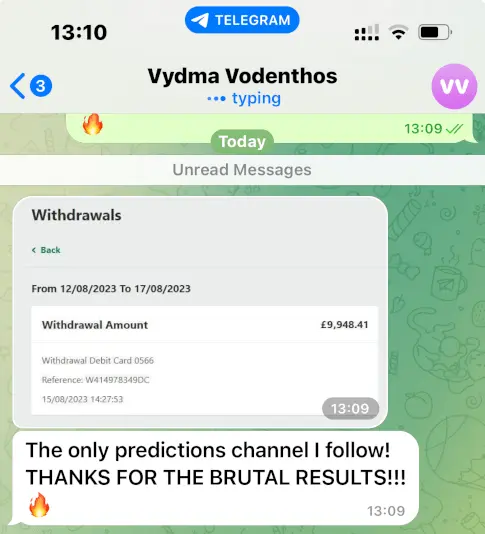
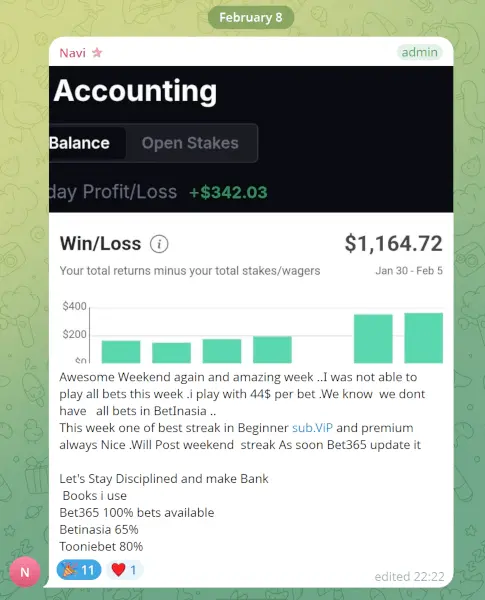
Our Clients’ Results

UEFA Nations League
Ukraine need a win to stay in contention, but will be without Tsygankov and Zubkov and have scored just two goals in four matches.
Northern Ireland won the first fixture 3–0 and, given their upcoming trip to Budapest, will be content with a draw. We expect a low-scoring match.
UEFA Nations LeaguePoland need a positive result to ensure that Romania cannot catch them, and they have better players in every position.
Poland’s results in the fifth round have not been particularly good, whilst Romania will play with great enthusiasm at home, so a bet on a draw makes sense.
UEFA Nations LeagueIsaac, Kulusevski and Elanga have returned, whilst Gökçer has scored in every match of the group stage.
Bosnia are unbeaten and need a win to take top spot, but will be without Muharemović, who is suspended, whilst their victory over Poland came courtesy of a last-minute penalty in a match in which Poland created far more chances.
In the packed ‘Strawberry Arena’, we reckon Sweden’s attack will prove too strong.
Brazil - Seria AThe team are in 14th place, two points behind 12th, which secures a place in the Copa Sudamericana play-offs.
Atlético MG look particularly weak at the moment.
The team have lost three consecutive league matches, scoring just two goals during that period and failing to score a single goal in their last two matches.
Away from home, the team create very few chances, having recorded an xG of just 0.37 during their visit to Botafogo.
Brazil - Seria AThey are one point behind 12th place and have a game in hand, so they must fight for a win against the weakest team in the league.
“Chapecoense” have by far the weakest defence, conceding more than two goals per match, but their matches are high-scoring, with over 2.5 goals in five of their last six fixtures.
They have long since been relegated, so they will play without pressure and could even spring a surprise.
Vasco have scored over 2.5 goals in three of their last four matches, so we expect at least three goals.
Our best predictions are on Telegram
What Are Mathematical Football Predictions
Football is maths! Just as bookmakers use it to calculate their odds, our tipsters have developed a special algorithm that factors in the most important elements affecting a sporting event.
Behind every likely outcome we forecast lies not just statistical data such as total points won, the last 5 matches and the head-to-head record between the two teams over the past two years, but also the most crucial factors for that particular fixture. These are determined individually for each match – for one it might be fatigue, if the team played 2-3 days ago with the same lineup, for another it could be missing goalscorers, for a third it might be motivation. Sometimes several factors come into play at once.
Every generated mathematical prediction is also reviewed manually by one of our specialists, who adds the one thing the algorithm can’t know – the latest news around the match. This is precisely why our mathematical football predictions in this section have such a high success rate.
How Does Our Algorithm Work?
Most people picture an algorithm as a black box that “spits out” results. Ours works differently – it combines quantitative data with qualitative human judgement, which makes it considerably more reliable than automated systems.
Statistical Foundation
The starting point is always statistics – form, results in recent matches, home and away performance, head-to-head meetings. You can check these match statistics yourself before deciding whether the model’s prediction makes sense for a specific fixture.” This is the foundation everything else is built on.
Key Factors for the Specific Match
Statistics alone aren’t enough. Two teams may look evenly matched on paper, but if one is playing its third match in seven days while the other has had a full week’s rest, the real picture is quite different. The algorithm weighs these factors individually for each fixture.
Manual Review by a Specialist
The final step is perhaps the most important one. Before we publish a mathematical tip for a given match, one of our specialists reviews the result and adds context the algorithm can’t capture – recent news, questionable decisions around the starting lineup, or something that simply doesn’t show up in the numbers.
How to Profit from Mathematical Match Predictions
The most important thing before placing a bet is being informed. Mathematical match predictions save you the time of analysing statistics, following team news and comparing odds – and all of this is provided completely free of charge.
Single or Accumulator?
If you prefer single bets, choose a prediction with a suitable price and play it on a separate slip. If you’re a fan of accumulators, you can combine several mathematical tips into one coupon – but keep in mind that the more bets you combine, the higher the risk becomes.
Focus on Leagues You Know
Our advice is to concentrate on 1-2 leagues that you follow regularly. When you know the context – the teams, the coaches, the style of play – today’s mathematical predictions become much easier to assess and interpret. Don’t bet blindly based on the bookmaker’s odds alone.
Mathematical vs Intuitive Predictions – What’s the Difference?
Most people bet on gut feeling. They like a certain team, have followed it for years and trust it unconditionally – even when the numbers say otherwise. This is entirely understandable, but it rarely leads to long-term profit.
Intuitive predictions rely on subjective judgement – the last half you watched, a friend’s opinion, or simply a “feeling” that something will come in. Mathematical football tips go the opposite way – data first, conclusions second.
Emotion Is an Expensive Mistake
When you bet on your favourite team, your brain automatically looks for confirmation of what it has already decided. You ignore the negative signals and exaggerate the positive ones. A mathematical model has no favourite team – it assesses every fixture by the same criteria.
Consistency Is Key
Intuition changes from day to day. Today’s mathematical football predictions are based on the same process every time – which means the results are comparable and trackable over time. That’s the only way to genuinely judge whether the system works.
The Two Approaches Aren’t Mutually Exclusive
A mathematical prediction is a starting point, not a verdict. If the algorithm points in one direction, but you have specific information it can’t account for – such as an injury announced an hour before kick-off – your judgement may be more accurate. Combining both approaches is exactly what our specialists do.
Pros and Cons of Mathematical Predictions
The mathematical approach to football tips is not a magic formula. It has real strengths, but also limitations that are important to understand before you start following it.
Advantages
- Objectivity – the algorithm isn’t influenced by emotion, media narratives or how popular a team is. It assesses every match by the same criteria.
- Consistency – unlike intuition, the mathematical model works the same way every day. This makes the results trackable and comparable.
- Time saved – instead of analysing dozens of matches yourself, you get a ready-made mathematical football prediction backed by concrete data.
- Long-term reliability – over a sufficiently large sample of bets, mathematical models have historically outperformed random selection.
Disadvantages
- Doesn’t catch everything – the algorithm can’t account for every piece of news in real time. A surprise injury, a managerial change or internal issues within a team sometimes fall outside its radar.
- Not infallible – football contains unpredictable elements that no model can fully eliminate. Even the best predictions of today have their own failure rate.
- Requires patience – results show up over the long term, not after three bets. Anyone expecting instant profit will be disappointed quickly.
Common Mistakes When Following Mathematical Predictions
A mathematical tip can be perfectly crafted, but if you play it wrong, the result will still be disappointing. Here are the mistakes we see most often.
Залагане срещу прогнозата заради “усещане”
It happens regularly – the algorithm points one way, but the punter bets the other way because “I watched their match last week and I know better.” Sometimes it pays off, more often it doesn’t. If you follow mathematical football predictions, follow them consistently – otherwise you can’t judge their real value.
Ignoring the Reason of the Prediction
Every one of our mathematical predictions comes with a short explanation of why it was chosen. Many people skip straight past it and only look at the odds. But that note contains the context the algorithm can’t capture – and it’s sometimes exactly why you shouldn’t play a particular bet.
Too Many Combinations
Today’s mathematical tips are convenient to combine – there are plenty of matches and the temptation is strong. The problem is that with every bet added to the slip, the risk grows disproportionately. An accumulator with five good selections still loses if just one of them doesn’t come in.
Changing Strategy After a Bad Day
The algorithm doesn’t care about yesterday’s results – it keeps working the same way. Punters, however, often react to a single bad day with a complete change of approach. Mathematical models are judged over long runs, not individual days.