
All the Champions League winners: Which team has won the most trophies?

The UEFA Champions League, formerly known as the European Champion Clubs’ Cup, is the most prestigious club football competition in Europe. For more than 70 years, it’s brought together the continent’s strongest sides and produced some of the greatest moments in football history. It’s precisely this concentration of top clubs that’s also why bookmakers offer some of their most attractive odds for matches in the tournament.
To date, the most successful club in the competition is Real Madrid, who’ve won the trophy more times than any other side. Below, we’ll take a look at all the Champions League winners, the clubs with the most titles, the tournament’s top goalscorers, and some of the most legendary teams to have left their mark on its history.
But before we head back in time, don’t forget you can also follow the drama of the current season with our up-to-date Champions League predictions.
 UEFA Champions League
 AS Roma
 Real Madrid
UEFA Champions League
Real Madrid
UEFA Champions League
 Aston Villa
 Fenerbahce
UEFA Champions League
Fenerbahce
UEFA Champions League
 Real Betis
 Porto
Porto

Our best predictions are on Telegram
Start winning with usA brief history of the Champions League
The tournament was established in 1955 under the name European Champions’ Cup (ECC). In its early years, the format was significantly different from the one we know today – it mainly featured the champions of European countries, and the competition was conducted entirely as a knockout tournament.
From ECC to Champions League
The major change came in 1992, when the tournament was renamed the Champions League and gradually began to expand. It was no longer restricted to national champions; leading teams from Europe’s top leagues were also eligible to take part.
Over the years, the format has changed several more times, and the tournament has become the competition that today brings together the best clubs and players in Europe.
How has the tournament’s format changed?
The Champions League has by no means always looked the way we know it today. Since its inception in 1955, the competition has undergone several significant changes – both in the number of participants and in the way the champion is determined.
- 1955-1991: European Champions’ Cup – the tournament mainly featured the national champions, and the competition was conducted entirely as a knockout tournament with home-and-away legs right up to the final.
- 1992-2003: The start of the Champions League – the tournament adopted its current name and gradually began to allow more than one representative from the strongest European leagues. A group stage was also introduced prior to the knockout rounds.
- 2003-2024: The familiar group stage format – 32 teams are divided into eight groups of four, playing each other in home-and-away fixtures. The top two teams from each group progress to the knockout stage.
- From the 2024/25 season: A new era – the groups are replaced by a single group stage featuring 36 teams, in which each side plays eight matches against different opponents. The top teams progress directly to the round of 16, whilst the rest compete for a place there via play-offs.
Thus, from a relatively small tournament for national champions only, the Champions League gradually evolved into the massive club competition we know today.
Which teams have won the Champions League the most times?
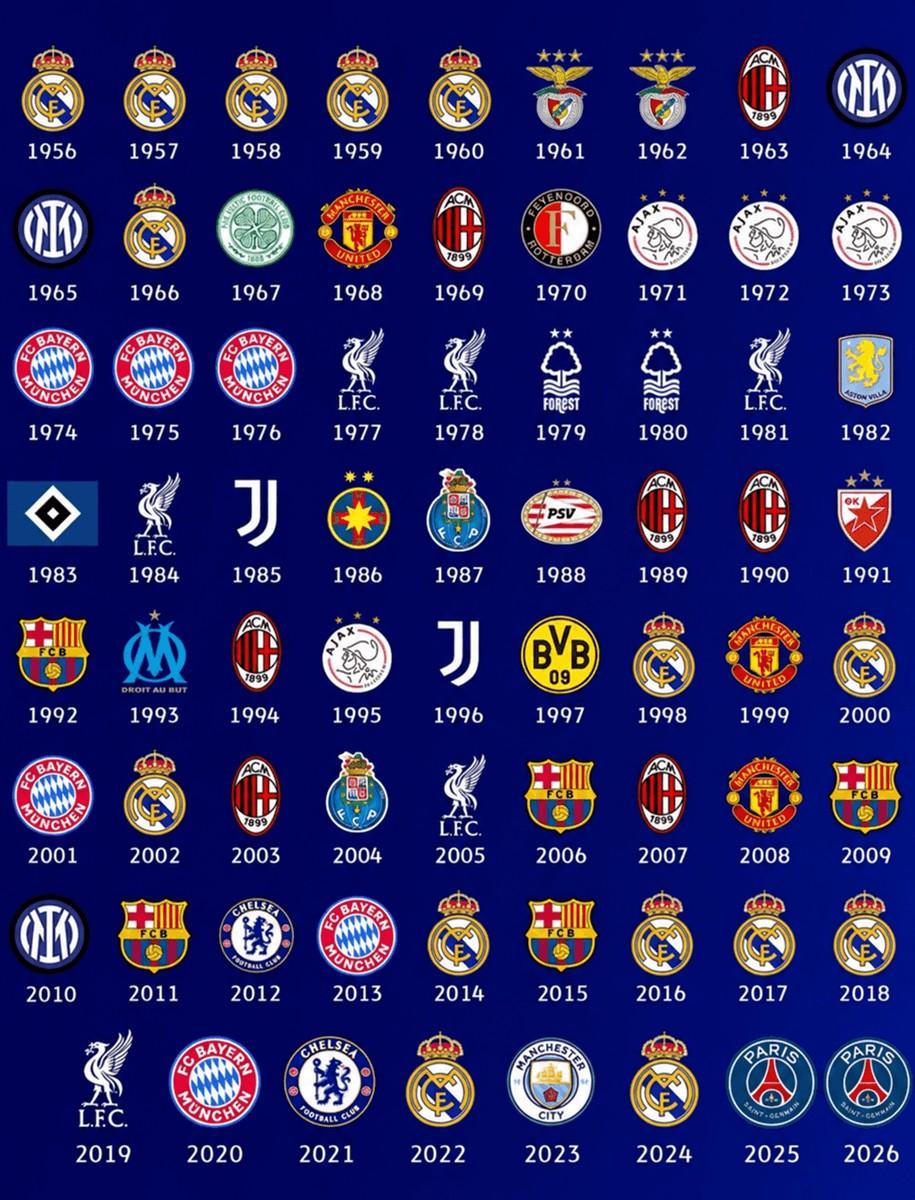
The Champions League has been won by 24 different clubs, but only a few of them have managed to establish true dominance in the competition. The all-time record holder is Real Madrid with 15 titles, followed by Milan with 7, and Bayern Munich and Liverpool with 6 trophies each.
The gap between Real Madrid and the rest is significant – the Spanish giants are not only the first major dominant force in the tournament’s history, having won five consecutive European Cups, but they have also managed to produce several more great generations of players who continue to win the trophy decades later. It is precisely this long-term consistency that often makes Real Madrid the basis of our predictions for a single bet of the day whenever they are playing in the competition.
Below, we have listed all the teams that have won the Champions League, the number of their titles, the years in which they triumphed, and how many times they have lost in the final.
| Club | Trophies | Season | Lost Finals |
|---|---|---|---|
| Real Madrid | 15 | 1956, 1957, 1958, 1959, 1960, 1966, 1998, 2000, 2002, 2014, 2016, 2017, 2018, 2022, 2024 | 3 |
| Milan | 7 | 1963, 1969, 1989, 1990, 1994, 2003, 2007 | 4 |
| Bayern Munich | 6 | 1974, 1975, 1976, 2001, 2013, 2020 | 5 |
| Liverpool | 6 | 1977, 1978, 1981, 1984, 2005, 2019 | 4 |
| Barcelona | 5 | 1992, 2006, 2009, 2011, 2015 | 3 |
| Ajax | 4 | 1971, 1972, 1973, 1995 | 2 |
| Inter Milano | 3 | 1964, 1965, 2010 | 4 |
| Manchester United | 3 | 1968, 1999, 2008 | 2 |
| Juventus | 2 | 1985, 1996 | 7 |
| Benfica | 2 | 1961, 1962 | 5 |
| Chelsea | 2 | 2012, 2021 | 1 |
| Nottingham Forest | 2 | 1979, 1980 | — |
| Porto | 2 | 1987, 2004 | — |
| Paris Saint-Germain | 2 | 2025, 2026 | 1 |
| Celtic | 1 | 1967 | 1 |
| Hamburger SV | 1 | 1983 | 1 |
| FCSB (Steaua Bucharest) | 1 | 1986 | 1 |
| Marseille | 1 | 1993 | 1 |
| Borussia Dortmund | 1 | 1997 | 2 |
| Manchester City | 1 | 2023 | 1 |
| Feyenoord | 1 | 1970 | — |
| Aston Villa | 1 | 1982 | — |
| PSV Eindhoven | 1 | 1988 | — |
| Red Star Belgrade | 1 | 1991 | — |
All-time top scorers in the Champions League
The Champions League has provided a stage for some of the greatest goalscorers in the history of football. Cristiano Ronaldo is the clear leader in the all-time rankings with 140 goals in 183 matches, followed by Lionel Messi with 129 and Robert Lewandowski with 109. The figures relate to matches in the main phase of the tournament, excluding the qualifying rounds. The long-term statistics for top scorers show why the analysis behind all football mathematical predictions relies precisely on data spanning many seasons, rather than on the current form of a particular player or team.
| Player | Country | Goals | Games |
|---|---|---|---|
| Cristiano Ronaldo | Portugal | 140 | 183 |
| Lionel Messi | Argentina | 129 | 163 |
| Robert Lewandowski | Poland | 109 | 144 |
| Karim Benzema | France | 90 | 152 |
| Raúl González | Spain | 71 | 142 |
| Kylian Mbappé | France | 70 | 98 |
| Thomas Müller | Germany | 57 | 163 |
| Erling Haaland | Norway | 57 | 58 |
| Ruud van Nistelrooy | Netherlands | 56 | 73 |
| Harry Kane | England | 54 | 70 |
There is also an interesting contrast here – whilst Ronaldo and Messi have racked up a huge number of matches and goals over the years, Erling Haaland has already scored 57 goals in just 58 matches. Kylian Mbappé also continues to climb the rankings and finished the 2025/26 season as the tournament’s top scorer with 15 goals.
The 6 most legendary teams in the Champions League
The Champions League has seen some of the strongest squads in the history of football, but not all great teams can be judged solely by the number of trophies they have won. Some have dominated for years, others have changed the way football is played, whilst others have left behind generations of players who are still remembered as legends today.
Here at Betinum, we have selected six teams which, in our view, most deserve a place amongst the most legendary in the tournament’s history. Of course, this selection is subjective, and it is perfectly normal for others to hold different opinions. We have not ranked them by strength, as their successes were achieved in different eras and under different circumstances.
Analysing such dominant teams is also part of how we prepare our top football predictions every season.
Real Madrid
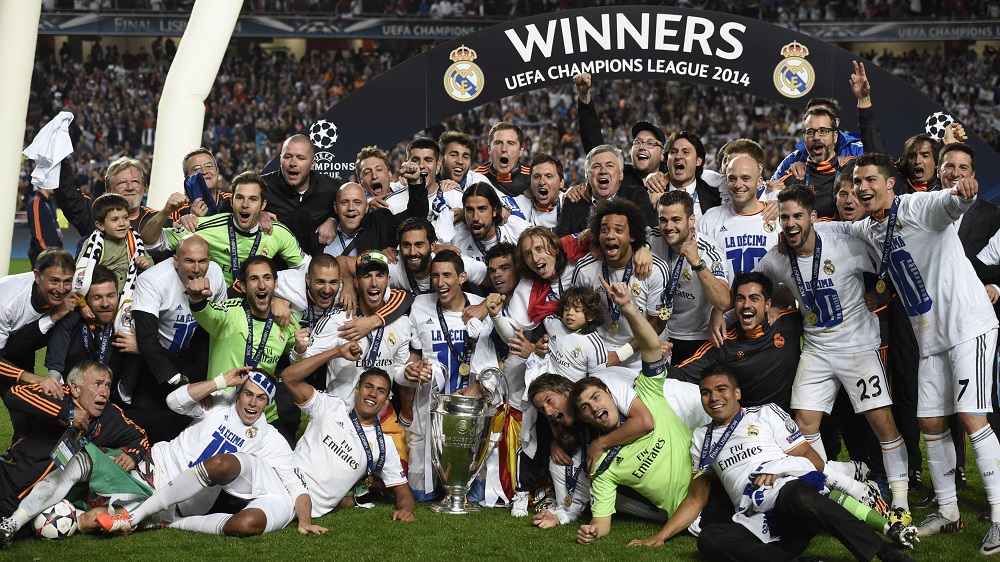
Two of Real Madrid’s legendary teams remain among the greatest in the history of the Champions League. The first is the side that won the European Cup five times in a row, in the very first five editions of the tournament between 1956 and 1960. The legends of those teams include Puskás, Kopa, Gento, Santamaría and Del Sol, but the undisputed superstar was Alfredo Di Stéfano.
It is hard not to mention the ‘Galácticos’ at the start of the new century, with players such as Zidane, Ronaldo, Beckham, Raúl and Roberto Carlos. In terms of achievements, however, the stars of the ‘White Ballet’ between 2014 and 2018 undoubtedly remain among the strongest teams Real Madrid has ever fielded. Why? Because in five seasons they won the Champions League no fewer than four times – in 2014, 2016, 2017 and 2018.
Key figures in this historic run were Sergio Ramos, Marcelo, Luka Modrić, Toni Kroos, Gareth Bale, Karim Benzema and, of course, Cristiano Ronaldo. It was precisely those three consecutive titles between 2016 and 2018 that made this squad one of the most iconic teams in the tournament’s modern history.
Milan
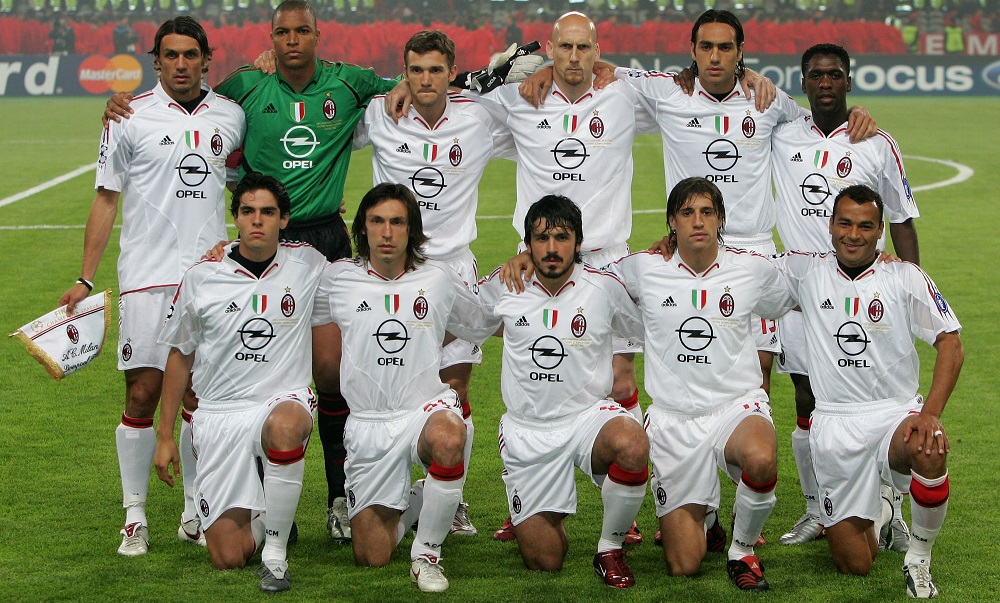
Entire books have been written about the Milan teams, but they have not enjoyed very long periods of dominance, winning one Champions League title after another. Their successes have been sporadic but very consistent – from their first trophy in 1963 to their last in 2007. With seven trophies to their name, the Rossoneri are among the most successful clubs in the tournament’s history.
However, we’re going to focus on a truly legendary team that didn’t achieve as much success as it could have. We’re talking about the Milan side from 2003 to 2007. During this period, the team reached three finals in four seasons and won the tournament once. In 2005, Milan played what many consider to be the greatest final in Champions League history.
The reason is well known – Milan led 3–0 at half-time and seemed to have the match against Liverpool completely in the bag. However, the English side staged an incredible comeback in the second half and, after the score was levelled at 3–3, went on to win on penalties. Two years later, Milan had the chance for revenge and, in 2007, beat Liverpool 2–1 in the final.
Carlo Ancelotti’s team was packed with legends – Dida, Cafu, Nesta, Maldini, Gattuso, Pirlo, Seedorf, Kaká, Shevchenko and Inzaghi. It was precisely this combination of individual class, experience and exceptional tactical preparation that made the Milan side of that era one of the strongest club teams of its generation.
Bayern Munich
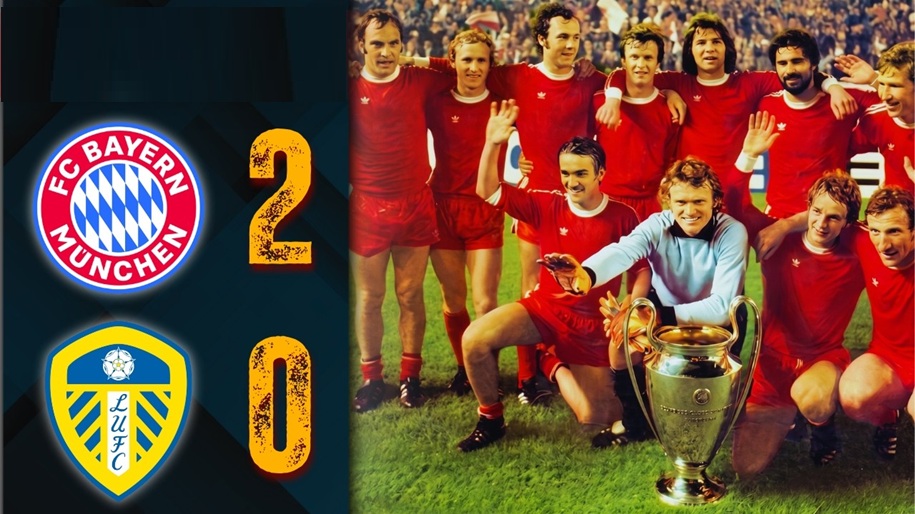
Bayern Munich is one of the few teams that can boast several distinct eras of dominance in Europe. The German giants have won six European Cups across three different periods, backed by some of the greatest footballers in history.
The first golden era came between 1974 and 1976, when Bayern won the European Cup three times in a row. At the heart of that great squad were Franz Beckenbauer, Gerd Müller, Sepp Maier and Paul Breitner. It was this generation that laid the foundations for the club’s illustrious European history.
The next major success came in 2013 under Jupp Heynckes. Bayern won the treble, defeating Borussia Dortmund 2-1 in the final at Wembley in the first all-German final in the tournament’s history. Arjen Robben and Franck Ribéry were among the standout players in that squad.
Just seven years later, Bayern reached the pinnacle once again. In the 2019/20 season, the Germans won the Champions League with an impressive record of 11 wins from 11 matches, defeating Paris Saint-Germain 1-0 in the final. This was the club’s sixth European trophy, and Robert Lewandowski was one of the season’s standout heroes.
From Beckenbauer and Gerd Müller, through Lothar Matthäus and Oliver Kahn, to Robben, Ribéry and Lewandowski – Bayern have far too many legendary generations to be left out of such a ranking. It is precisely their ability to return to the top across different eras that places them amongst the greatest teams in the history of the Champions League.
Liverpool
Liverpool’s teams will be remembered for their phenomenal dominance in the late 1970s and early 1980s. Between 1977 and 1984, the Reds won the European Cup no fewer than four times and were a force to be reckoned with in every season of the competition. However, this legendary period came to an end in 1985, when Liverpool played yet another final against Juventus, featuring Michel Platini.
At the Heysel Stadium in Brussels, a terrible tragedy occurred before the match, in which 39 people lost their lives. The final went ahead nonetheless, and ‘La Vecchia Signora’ beat Liverpool 1-0. Following the tragedy, English clubs were banned from European competitions, bringing an end to the dominance of that legendary Liverpool side in Europe.
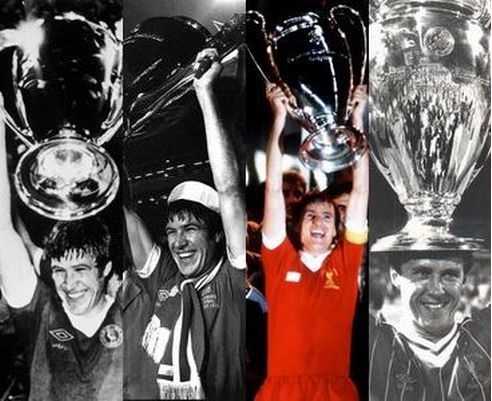
Before that, however, from 1977 to 1985, Liverpool were among the strongest teams in the competition and won the title four times – in 1977, 1978, 1981 and 1984. Behind these successes was a generation of exceptional footballers such as Phil Neal, Alan Hansen, Steve Hyway, Graeme Souness, Ray Clemence, Steve Nicol, Ray Kennedy, Mark Lawrenson, Phil Thompson and Alan Kennedy. Without a doubt, the biggest names in that team were Ian Rush and Kenny Dalglish.
Liverpool reached the summit once again in 2005, when they staged one of the most incredible comebacks in the history of the finals and beat Milan on penalties, despite trailing 0-3 at half-time. Jürgen Klopp’s side from the late 2010s was also exceptional; under his leadership, Liverpool reached a total of five finals in various European competitions. In 2019, the Reds won their sixth European trophy following a 2-0 victory over Tottenham.
Barcelona
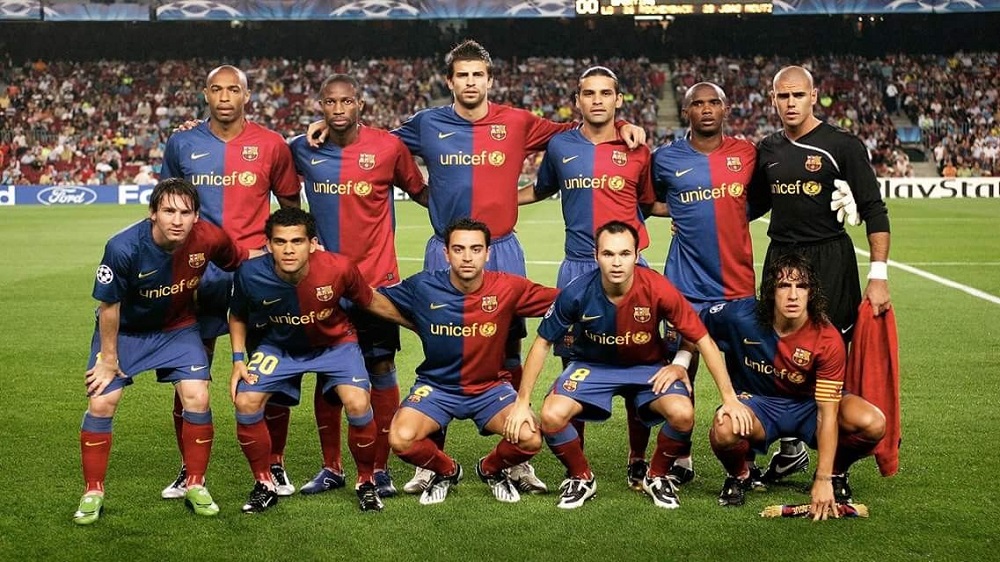
The era of Messi, Guardiola, Busquets, Xavi and Iniesta remains one of the greatest in Barcelona’s history. The Catalans boasted perhaps the strongest team ever seen in the Champions League, purely in footballing terms, between 2009 and 2011, when they were at their absolute peak.
As early as 2006, Barcelona, led by Frank Rijkaard and featuring players such as Deco, Ronaldinho, Puyol, Xavi, Mota, Iniesta, van Bronckhorst and the young Lionel Messi, won their second European Cup. Just a few years later, however, Pep Guardiola’s even more impressive era began.
With Guardiola’s arrival and the introduction of tiki-taka, not only Barcelona but also the Spanish national team began to dominate world football. Barça won the Champions League in 2009 and 2011, and at the heart of this incredible squad were Messi, Xavi, Iniesta, Busquets, Puyol and a host of other players from the club’s legendary academy.
In 2015, Barcelona reached the pinnacle once again under Luis Enrique, led by the most lethal attacking trio – Messi, Luis Suárez and Neymar, known as MSN. The 3–1 victory over Juventus in the final brought the Catalans their fifth European Cup and cemented the club’s place amongst the most legendary teams in the tournament’s history.
Ajax
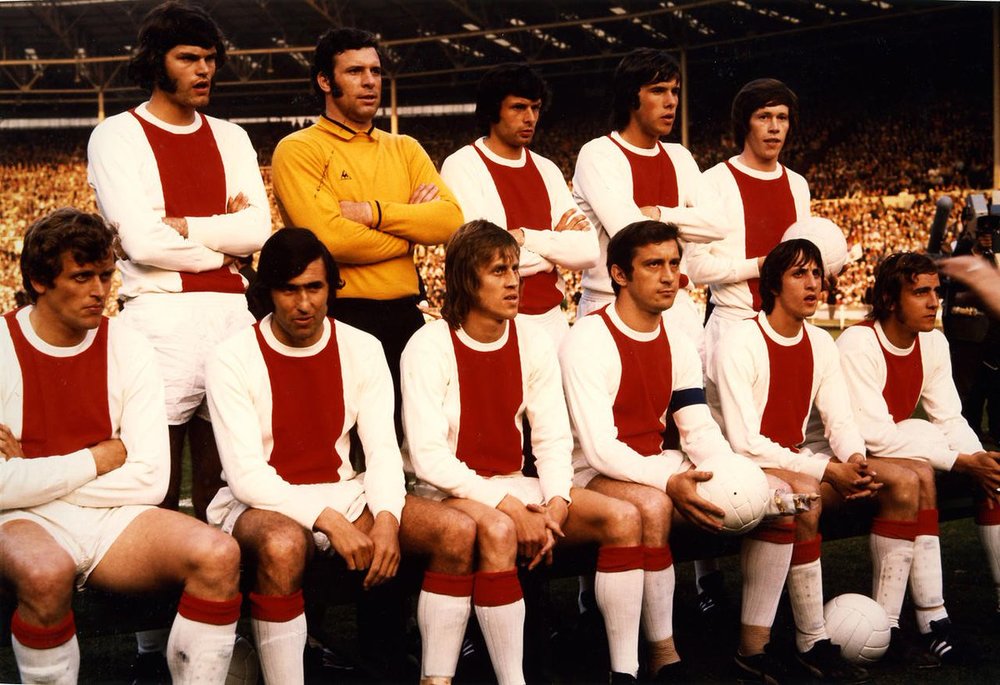
The reason Ajax is one of the greatest teams in the world is not just down to their unique academy. In fact, it was precisely this academy that helped create a brilliant team in the early 1970s, led by Rinus Michels, who introduced the concepts of so-called ‘total football’.
The tactic of total football is that any player can replace another on the pitch, with the exception of the goalkeeper. This allows a team to attack and defend with far more players; implementing such a tactic requires incredible physical fitness, technical ability and the skill for each player to fulfil different roles.
This was achieved in a unique way at Ajax, a team brimming with stars and playing in a 4-3-3 formation. The biggest names from that team were legends such as Piet Keizer, Johan Neeskens and, of course, Johan Cruyff, who later further developed the ideas behind total football at Barcelona.
That Ajax side won the European Cup three times in a row between 1971 and 1973, thus securing their place forever in the tournament’s illustrious history. Following Ajax’s dominance came Bayern Munich, who also won three consecutive titles, whilst Arigo Sacchi’s great AC Milan side also deserves a mention. As we have already noted, such a ranking always involves an element of subjectivity, as it is difficult to compare different generations directly.
Champions League records
The Champions League has a long history, which has naturally given rise to a huge number of impressive records. Some of these relate to teams and titles, whilst others concern individual players, goals and matches. Here are some of the most interesting ones:
- Most titles: Real Madrid – 15 trophies.
- Most finals: Real Madrid – 18 appearances in the final.
- Most consecutive titles: Real Madrid – 5 consecutive European Cups between 1956 and 1960.
- Most goals: Cristiano Ronaldo – 140 goals.
- Most appearances: Cristiano Ronaldo – 183 matches.
- Most goals in a single season: Cristiano Ronaldo – 17 goals in the 2013/14 season.
- Most titles as a manager: Carlo Ancelotti – 5 trophies.
- Youngest goalscorer: Ansu Fati – 17 years and 40 days when he scored for Barcelona against Inter in 2019.
- Most goals in a single match: Lionel Messi and Luís Adriano – 5 goals each in a single match.
These records show just how difficult it is to stay at the top in a competition with such fierce competition. That is precisely why the achievements of Real Madrid, Cristiano Ronaldo and Carlo Ancelotti seem all the more impressive. Recognising this level of dominance is also at the heart of our football predictions and value bets when we assess which favourite truly deserves its odds.