
How Hard Is It to Beat the Market? Betting Odds Efficiency

Odds are not just numbers. They are a market assessment that constantly changes as new information, money and decisions enter the market.
A number of analyses by Joseph Buchdahl show just how difficult it is to separate genuine skill from good or bad luck over a small number of bets.
He has pointed out that he would not draw serious conclusions about a bettor’s ability before they had a sample of at least around 1,000 bets. Even then, the odds they bet at and the size of the sample still matter.
This shows just how difficult it really is to beat the odds and the margin built in by bookmakers. One profitable week, or even a few good months, does not by itself prove that someone is genuinely better than the market.
What Does Betting Odds Efficiency Mean?

When we say that a market is efficient, we mean that the available information is already reflected reasonably well in the football odds.
The more accurately the price reflects the probability of an event happening, the less room there is for a mistake that a bettor can exploit.
If, for example, the true probability of an outcome is around 50%, the fair odds without a bookmaker margin would be around 2.00. The bookmaker, however, adds its margin, which makes the bettor’s job even harder. The higher that margin, the bigger the error you need to find in the market price to overcome it. Pinnacle, for example, explains the margin as the difference between the true probability and the odds being offered.
The market is not equally efficient everywhere. There is a huge difference between looking at Champions League match odds shortly before kick-off and an early market for a game in a small league where very little money has been bet yet.
How Does the Type of Bookmaker Affect the Odds?
Soft Bookmakers
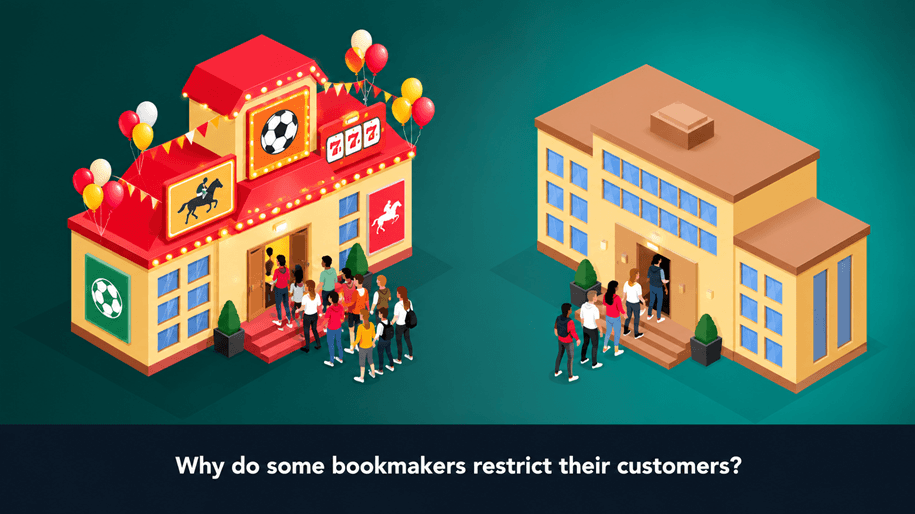
Soft, or so-called European bookmakers, generally focus mainly on recreational customers. You may find larger differences from the wider market with these bookmakers, particularly in the early hours after a match is opened for betting or in less popular leagues.
That does not mean their betting odds are constantly wrong. It simply means there may be more situations where a particular price is lagging behind the rest of the market. The downside is that when an account consistently takes advantage of these situations, some bookmakers may reduce its betting limits.
Sharp Bookmakers
Sharp bookmakers, such as Pinnacle, operate under a different model. They accept larger bets, maintain lower margins and use the activity of more informed customers as an additional source of market information. Pinnacle itself describes its approach as a combination of high limits, low margins and not restricting customers simply because they win.
This is exactly why their odds are usually much harder to beat. At first glance, that might sound strange – the margin is lower, yet the market is more difficult. The reason is that more information and more money from bettors actively looking for mistakes are passing through it.
Beating the bookmaker is not easy. They have access to huge amounts of data, models, traders and, most importantly, a margin working in their favour. You can make your own assessment of the market price by comparing the offered odds with the football data for the two teams and the specific match, but you should assume that much of the same information is also being analysed on the other side.
Why Do Betting Limits Matter?
High-Limit Markets
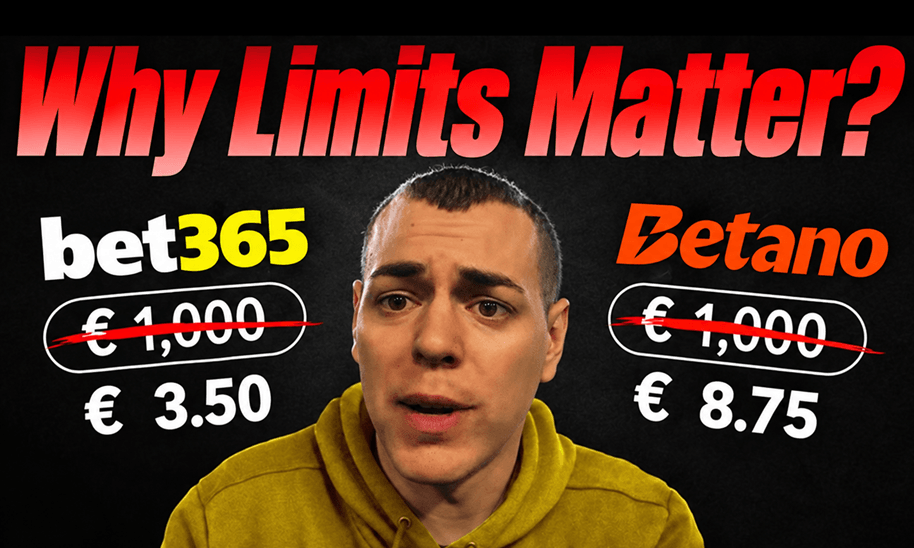
The higher the betting limits on a market, the more money can enter it. And when more bettors are able to place significant stakes, incorrect prices tend to be corrected more quickly. That is why higher limits often go hand in hand with a more efficient market.
At Pinnacle, for example, maximum stakes are dynamic, and the company states that limits generally increase as liquidity grows and the event gets closer.
Low-Limit Markets
With lower limits, the market can therefore be less efficient. Less money has passed through it, and the odds may not have been exposed to the same pressure from well-informed bettors.
My advice to beginners who want to understand how this process works is to first observe smaller markets and soft bookmakers, then compare how they behave with more liquid markets. That does not mean smaller leagues are automatically easy to beat.
They often come with less information, higher margins and significantly lower betting limits.
Why Do Odds Change?
When a bookmaker opens betting on an event several days in advance, the level of uncertainty is usually higher. A large amount of money has not yet entered the market, and not all of the information that will be available shortly before the match is known.
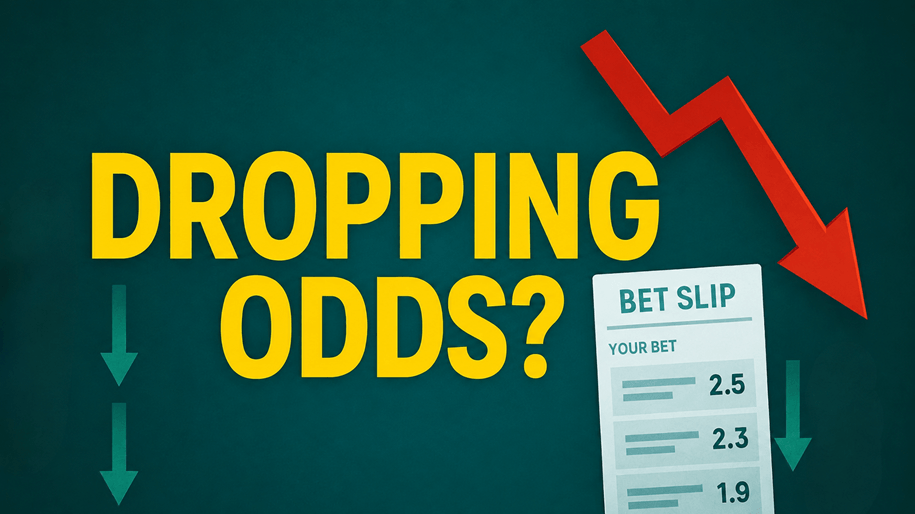
The market then starts doing its job. Bets are placed, new information appears and the odds are adjusted. If, for example, a team opens at 2.10 but enough market participants believe that price is too high, it may gradually fall to 1.95, 1.90 or even lower.
These are what we call dropping odds. It is important, however, not to assume that every odds drop automatically represents a good bet. If you see 2.10 move to 1.85, the important question is why it happened and whether you managed to take the better price before the correction.
This is also one of the reasons to follow odds across more than one bookmaker. In practice, different sports betting sites do not always react at exactly the same time, and one operator may keep a higher price available slightly longer than the others.
Why Is the Closing Line So Important?
The closer we get to the start of an event, the more information has already passed through the market. We have more bets, more participants and significantly fewer unknowns.
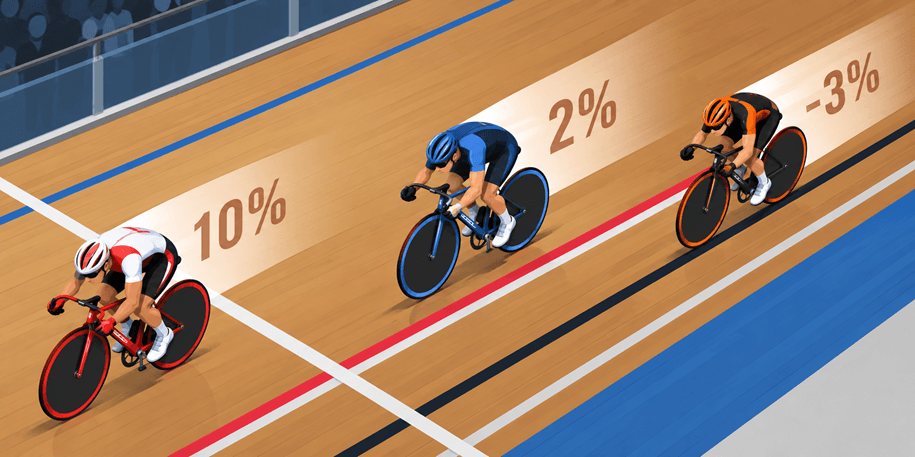
This is why the Closing Line – the odds available immediately before the event begins – is one of the most useful reference points for judging how good a price we managed to take.
If you placed a bet at 2.10 and the same selection closed at 1.85, you took a higher price than the final market price. If, however, you backed it at 1.80 and the odds were 2.05 shortly before kick-off, the market moved in the opposite direction.
That does not mean the Closing Line is some kind of absolute truth. Particularly in small and less liquid markets, the final price can still be inaccurate. Buchdahl, however, points to CLV as a very useful indicator because it can provide information about the quality of your decisions much faster than simply looking at profit and loss after hundreds or thousands of bets.
For that reason, do not look only at whether your last ten bets won. Also track the odds you took compared with the price at which the market closed.
How Can We Take Advantage of Market Inefficiency?
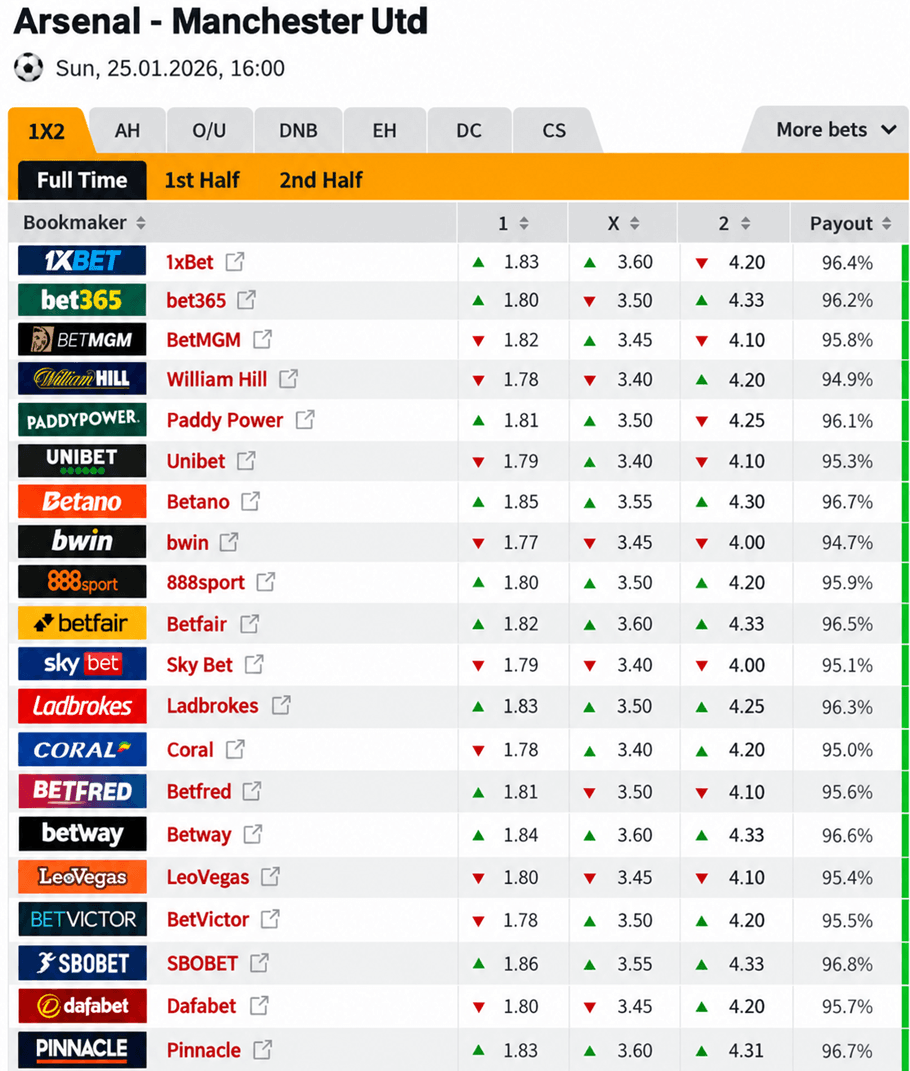
Using basic tools such as real-time odds-tracking software, accounts with several bookmakers and fast sources of information can help identify moments when the market has not yet fully adjusted.
There are two main things we can take advantage of.
Compare Odds Across Different Bookmakers
Odds differ from one bookmaker to another. If one bookmaker offers 1.85 on the same bet, another offers 1.93 and a third offers 2.00, there is no logical reason to keep accepting the lowest price.
It also means that complete efficiency does not exist everywhere at every single moment. One bookmaker may already have adjusted its price while another has not done so yet.
That is why having access to more than one account and comparing football odds before placing a bet can have a significant effect on your long-term results.
Act Before the Market Corrects
Odds are dynamic. When important new information enters the market, the price starts to move. Sometimes the correction takes minutes; in major markets, it can happen even faster.
These short periods are the most interesting part of market inefficiency. If the information is already known to everyone and the odds have fallen from 2.10 to 1.75, the opportunity that existed earlier may already be gone.
That is why speed matters, but it should not be confused with rushing into a bet. The market’s first reaction is not always correct, and there is no reason to place a bet simply because you see the odds dropping.
How to Choose a Tipster If You Do Not Want to Follow the Market Yourself

Following odds, market movements and different bookmakers takes time. This is where tipsters come in, offering that work as a service.
It is important, however, to look carefully at all the data a tipster provides. Do not focus only on the total number of winning bets. What matters are the odds at which the tips were published, the results over a sufficiently long period and whether you can realistically obtain a price close to the one being quoted.
If a tipster consistently publishes a bet at 2.00 but, by the time you see it, the odds are already 1.70, their statistics may look good while the actual result for the customer can be very different. This is a detail that is often overlooked.
A good approach is to follow some of the tips for free first and only then decide whether the service makes sense for you. If you would rather not spend your time following the market, tracking odds movements and monitoring dozens of matches yourself, take a look at our Subscriptions and see whether one of the options suits you.
If we missed something, add it in the comments