
How to Spot Fake Betting Strategies and Scams

The internet is full of betting systems, strategies and self-proclaimed experts promising to make sports betting easier. Some simply sell poor advice. Others go much further by using misleading results, fake statistics or unrealistic claims to convince people to pay for something that does not work as advertised.
That distinction matters. A losing betting strategy is not automatically a scam. Betting scams involve deliberate deception, usually through false claims, manipulated results or misleading information designed to make you hand over money.
The simplest question to ask is this: Can the claims actually be verified?
What are betting scams?
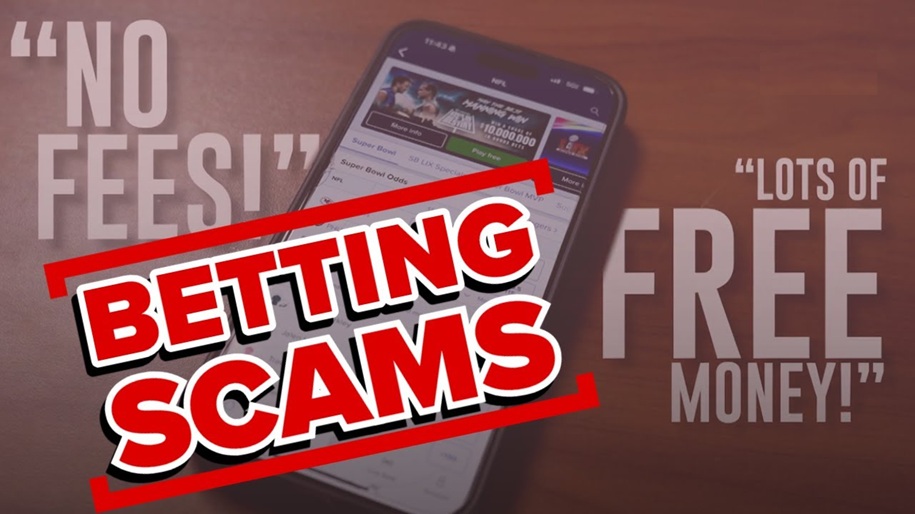
Betting fraud can take many forms. Common examples include:
- paid tipster services with fabricated records;
- systems claiming guaranteed profits;
- fixed-match or insider-information offers;
- fake betting platforms;
- so-called sports investment schemes;
- services selling a “secret” algorithm or AI model;
- social media accounts showing only winning bets.
The problem is not insignificant. In its Targeting Scams Report 2025, Australia’s National Anti-Scam Centre reported a 280% increase in losses linked to betting and sports investment scams, with reported losses reaching AUD 2.4 million.
That does not mean every paid betting service is fraudulent. It does mean that bold claims deserve proper scrutiny before you trust them.
6 warning signs of fake betting strategies

Guaranteed profits
Phrases such as:
- “guaranteed winner”
- “100% profitable system”
- “risk-free betting”
- “you cannot lose”
should immediately make you cautious.
Sports betting always involves uncertainty. Even a well-researched selection can lose. The UK Advertising Standards Authority also states that betting tipsters should not imply guaranteed success or suggest that past winning performance guarantees future profits.
You only see the winning bets
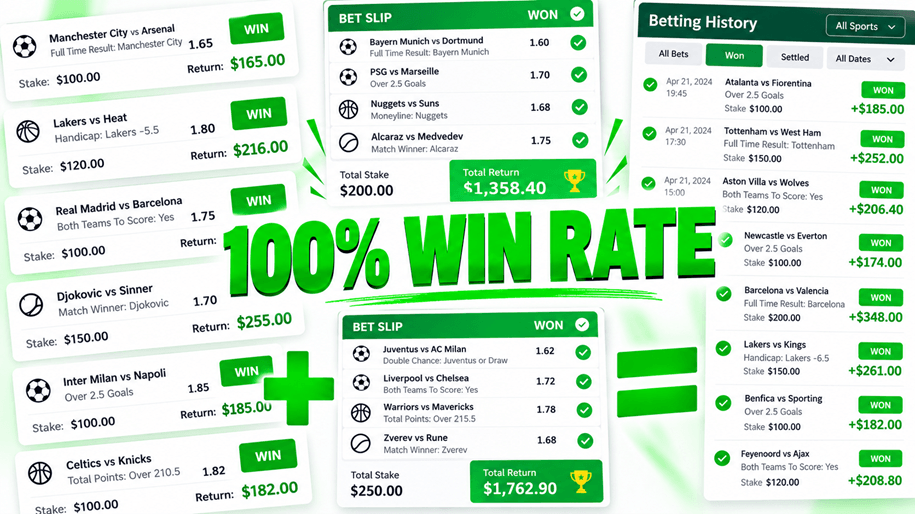
Ten screenshots of winning bets do not prove that a strategy is profitable. The useful questions are:
- How many bets were placed in total?
- How many lost?
- What odds were used?
- How much was staked?
- What was the overall result?
- What period does the record cover?
A social media account can post five winners from the weekend while quietly ignoring ten losing bets from earlier in the week. Be especially careful if older posts disappear or the “record” seems to restart whenever results improve.
If you want to see what a properly and comprehensively kept record looks like, take a look at our guide on how to track your betting results correctly.
The results cannot be independently checked
A claim such as “+350 units over the last six months” sounds precise, but it means very little without evidence.
For a published result to be of value, you need to be able to see:
- when each selection was published;
- the available odds;
- the stake;
- the final result;
- both winning and losing bets.
A betting history recorded before events take place is far more useful than a spreadsheet created afterwards. That is precisely why we publish our tips and predictions before the start of each match, rather than after it has finished.
The advertised odds were not realistically available
Sometimes the problem is not the selection itself, but the price used to calculate the result. Imagine a service records a winner at 3.00, but by the time subscribers received the pick, the realistic market price was already around 2.20.
Across dozens or hundreds of bets, that difference can completely distort the claimed profitability. Always ask whether the recorded odds were genuinely available for long enough for normal users to place the bet.
Comparing this with the actual football stats from the match itself also helps you to assess whether the claim actually corresponds to what happened on the pitch.
You are constantly pressured to buy

“Only two VIP places left.”
“Price increases in one hour.”
“Last chance to get today’s guaranteed picks.”
Urgency is often used to stop people from checking the service properly. If the main sales argument is pressure rather than evidence, that is a warning sign. Legitimate services should be able to explain their record and methodology without forcing you into an immediate decision.
The “secret algorithm” cannot be explained

Algorithms, statistical models and AI can genuinely be used in sports analysis. But simply mentioning AI does not make a betting system credible.
A company does not need to reveal every detail of its model, but it should at least be able to explain:
- what type of data it uses;
- what the model is trying to identify;
- how performance is measured;
- over what sample the strategy has been tested.
“Our AI finds 98% safe bets” is not a methodology. It is a marketing claim.
Genuine betting analysis vs a suspicious system
| Genuine betting analysis | Suspicious or fake system |
|---|---|
| Talks about probability and uncertainty | Promises guaranteed results |
| Shows both wins and losses | Shows mostly winners |
| Uses realistic, recorded odds | Relies on profit screenshots |
| Reviews performance over a long period | Promotes one exceptional week |
| Explains the reasoning behind selections | Hides behind a "secret system" |
| Accepts losing runs as part of betting | Claims the method almost never loses |
| Gives you time to check the information | Pressures you to pay immediately |
None of these points proves fraud on its own. The more of them you see together, however, the more cautious you should be.
How to check a betting strategy before paying for it

You do not need a complicated audit. Start with a few basic checks.
Look for the full betting record.
Do not judge the service by its latest winners. Look for a meaningful period containing all bets.
Check timestamps and odds.
The selection should have been published before the event and at odds that were realistically available.
Put the profit figure into context.
“£10,000 profit” sounds impressive. If it came from £500,000 in total stakes, the result looks very different.
Look for independent verification.
The less control the tipster has over the historical record, the harder it is to edit results afterwards.
Research the person or company.
Search the name together with words such as:
- scam
- fraud
- complaints
- reviews
One negative comment proves very little. A repeated pattern of similar complaints is much more meaningful. However, a recurring pattern of similar complaints becomes a much more significant warning sign. The safest way to test the legitimacy of a particular service is to start with a free subscription before paying anything at all. Compare this with how subscription plans are transparently presented by legitimate forecast providers, so that you have a basis for comparison.
A high win rate does not prove the strategy works
Win rate is one of the easiest statistics to present without enough context.
| Claim | What is missing? |
|---|---|
| 80% win rate | At what odds? |
| £5,000 profit | From how much total stake? |
| 12 winners in a row | What happened before and after? |
| +100 units | What staking method was used? |
You can win a high percentage of bets at short odds and still lose money. A statistic can be technically correct and still be highly misleading if the surrounding information is missing.
What should you do if you suspect betting fraud?

If you believe you may be dealing with betting fraud:
- stop sending money
- save screenshots, emails, chats and payment records
- do not provide more personal documents or banking information
- contact your bank or payment provider if you have already sent funds
- change passwords if you shared login details
- report the account, website or service to the relevant platform and authority
Keep as much evidence as possible. A complete record can make it much easier to show what happened later.
What is the easiest way to spot a fake betting strategy?
Ask whether the claims can be independently verified.
A credible betting service should be able to show a meaningful record containing both winning and losing bets, realistic odds, selections published before the event and clear results over time.
Guaranteed profits, selective screenshots, unexplained “secret” systems and pressure to pay quickly are all strong warning signs of sports betting scams.
Do not judge a strategy by its best day or best week. Judge it by the full record.
If we missed something, add it in the comments