
How to Bet Against the Market: When Does It Make Sense?

Most bettors notice line movement only after it happens. A team opens at 2.30, a few hours later it is 2.05, and by kick-off it might be 1.90. The easy reaction is to think: “Everyone is backing them, so maybe I should go the other way.” But that is not really what betting against the market means.
Betting against the market means taking a position because you believe the current price is wrong, even though the market is moving in the opposite direction. That can make sense, but only if you have a reason.
What does betting against the market mean?

Let’s use a simple example. Imagine Liverpool open at 2.30 to win. Money comes in, the market moves, and the odds drop to 1.90.
If your own analysis says the fair price should still be around 2.20, then you believe the market has moved too far. So instead of following the move, you look at the other side.
That is betting against the market. But there is an important distinction here: going against the market is not a strategy by itself. If the market moves and you automatically bet the opposite side every time, you are not finding a value bet. You are just being contrarian.
Why do betting markets move?
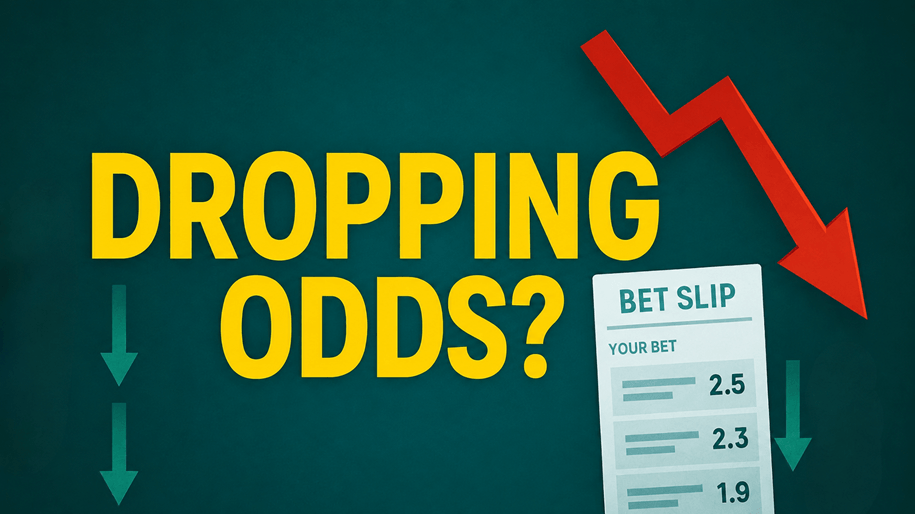
Before you go against a move, you need to understand why it happened. Odds can change because of injuries or suspensions, confirmed line-ups, weather, team news, large betting activity, respected bettors entering the market, public interest in one side or bookmakers adjusting their prices.
We see this regularly both in Premier League fixtures and on evenings featuring Champions League matches, where even the slightest piece of news can cause the odds to shift within minutes.
And sometimes the market simply gets better information. This is the part people often miss. If a price drops from 2.30 to 1.90, that does not automatically mean 1.90 is too short. It may just mean 2.30 was wrong.
When can betting against the market make sense?

The market overreacts to recent results
Football bettors love recent form. A team loses three matches and suddenly it is “finished”. But those three results might hide a different story. Maybe they played three of the strongest teams in the league. Maybe they created good chances and simply did not finish them. Maybe a red card changed one match and a late goal changed another.
The scoreline is real, but the reaction to it can still be too strong. If the market downgrades that team more than the underlying performance justifies, there may be a price worth looking at.
Public perception becomes too strong
Big clubs attract attention. Real Madrid, Manchester United, Liverpool, Barcelona – people want to bet on teams they know. But popularity alone does not create an edge on the other side. You still need the price to be wrong. La Liga’s big clubs, for example, often face a similar ‘popularity tax’ in their odds, just like the favourites in the earlier rounds of the Europa League.
If a popular team shortens from 2.10 to 1.80, that does not automatically mean the opponent is now a good bet. The useful question is: has the price moved because of real information, or because the market has become too optimistic?
That is a much better starting point than simply “fading the public”.
New information is priced too aggressively
Let’s say a key striker is ruled out and the odds move immediately. That makes sense. But how much should they move? If the team has a strong replacement, the tactical system does not depend heavily on one player and the market makes a huge adjustment, the reaction may be bigger than the actual impact.
The information is correct. The interpretation of the information can still be wrong. That is where betting against the market can become interesting.
Your probability estimate is different
This is the most important one. Imagine the market is offering 2.00. That price represents roughly a 50% implied probability before adjusting for the bookmaker’s margin. Your analysis says the real chance is closer to 43%. Now you have a reason to disagree.
Not because the market moved. Not because most bettors are on one side. Because your estimate of the probability is different from the price. That is the point where betting against the market starts to become a real decision rather than a reaction.
When does going against the market not make sense?
There are plenty of situations where the smartest move is simply to accept that the market may know more than you do.
| Situation | Why going against the market may be a mistake |
|---|---|
| The line moved after confirmed team news | The market may simply be correcting the price |
| You only know that most bettors are on one side | Popularity does not automatically mean the price is wrong |
| You have no independent probability estimate | You are guessing against collective information |
| You are reacting emotionally to a large move | A big move can still be justified |
| You assume every short price is overvalued | Sometimes the favourite really should be shorter |
This is where discipline matters. You do not have to disagree with every market move. Sometimes the correct conclusion is simply: I missed the better price.
How efficient is the betting market?
Betting markets are not perfect, but they are also not easy to beat. A study published in the International Journal of Forecasting analysed 33,060 football matches across 11 European leagues, using odds from 41 bookmakers. The researchers found that market efficiency differed between leagues, but mean market odds were generally efficient enough that most obvious biases benefited bookmakers rather than bettors. Some inefficiencies appeared when the best available odds across bookmakers were used.
A more recent 2025 study found something similar from a different angle: traditional 1X2 football markets showed inefficiencies, while Asian handicap markets produced much more efficient forecasts in the matches studied.
That is a useful reminder. The market can be wrong, but you should not start from the assumption that it is wrong.
Betting against the market is not the same as finding value
These two ideas overlap, but they are not the same.
| Betting against the market | Finding value |
|---|---|
| Your opinion differs from the market | Your estimated probability differs from the odds |
| Often means taking a contrarian position | Does not need to be contrarian |
| Focuses on market direction | Focuses on price |
| Can still be a bad bet | Requires a genuine pricing edge |
You can follow the market and still get value if you entered before the price moved. You can also go against the market and have no value at all. That is why the price matters more than whether you are with or against the crowd.
Should you follow public betting percentages?

Be careful. Seeing something like “72% of bets are on Arsenal” looks useful, but it leaves out a lot. You may not know which bookmaker the data comes from, whether it refers to number of bets or money wagered, how large the sample is or whether the bettors are recreational or experienced.
So “most people are on Team A” is not enough reason to bet Team B. At best, public betting data gives you another piece of context. It should not make the decision for you.
A quick check before you bet against the market
Before taking the opposite side, ask yourself:
- Why did the odds move?
- Did new information appear?
- Do I have my own estimate of the probability?
- Has the market overreacted, or simply corrected?
- Am I betting against the price or just against popular opinion?
- Would I still take this bet if I had never seen the market move?
That last question is especially useful. If the only reason you like the bet is because “everyone else is on the other side”, you probably do not have enough.
So, when does betting against the market make sense?
Betting against the market makes sense when you have a clear reason to believe the current odds no longer reflect the true probability of the outcome.
That can happen after an overreaction to recent results, excessive public sentiment or a market move that prices new information too aggressively.
But simply going against popular opinion is not an edge. You are not trying to prove the market wrong. You are trying to find a price that is wrong.
If we missed something, add it in the comments