
How Tony Bloom made billions from sports betting

Few people manage to completely transform the way business is done in football. Tony Bloom made billions from betting and then applied the same tactics at Brighton – turning it from a team on the brink of bankruptcy into one that generates millions in profit every year.
His story isn’t about a passion for football or a stroke of luck, but about how data can trump intuition.
On the brink of bankruptcy
In 1997, Brighton was on the brink of bankruptcy. The club was in free fall – without financial stability, without a clear direction, and with no light at the end of the tunnel. With no money and no home, they played at a shared stadium 112 km from the city.
The fans were furious, and in a situation like this, most clubs would have collapsed… History is full of such examples – teams that didn’t survive a similar crisis. But Tony Bloom had a different plan.
Who is Tony Bloom?

Bloom is not your typical football owner. Before entering the world of football, he built his reputation in a completely different field – as a professional gambler. He made his fortune through sports betting, using mathematical models that outsmarted traditional bookmakers.
While other bettors relied on intuition, football predictions, gut feelings, and “knowing the game”… Bloom’s algorithms predicted final scores with surgical precision. To the bookmakers, he is a nightmare – to himself, he is simply a man who understand math and how the odds work better than anyone else.
How do you make money from math?
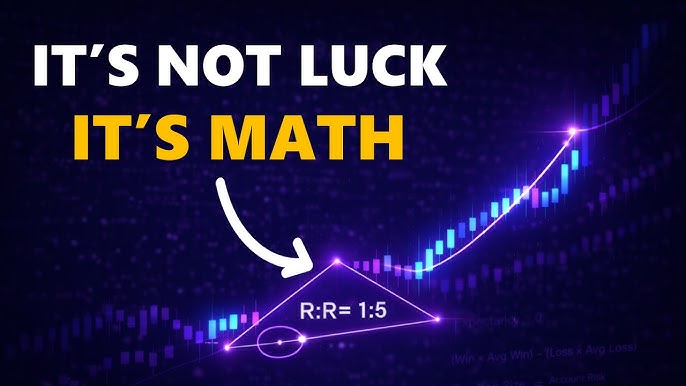
In the early 2000s, Bloom developed mathematical models. These weren’t simple tables or intuitive observations – they were complex algorithms that processed massive amounts of data. They analyzed thousands of statistics to identify “miscalculated” odds.
In other words – moments when bookmakers have made a mistake and are offering higher odds than the actual probability justifies. His advantage? He understands probabilities better than the bookmakers. And while they profit from the volume, Bloom profits from their mistakes.
Tony’s biggest bet

But Bloom’s biggest bet was yet to come. Not at the gambling table, not against a bookmaker – but against the entire football world. In 2009, he bought his favorite childhood club for £93 million. The football world laughed. Brighton – a small First Division club, with no trophies, no Premier League history, and no stars.
Brighton’s rivals have budgets ten times larger, massive stadiums, and decades of Premier League experience. What they lack, however, is Bloom’s secret weapon.
When football becomes a system
Bloom treats football like a math problem and immediately starts breaking everything down. Nothing is sacred – neither tradition nor “that’s just how it’s always been done.” The army of traditional scouts is on its way out. Replacing them are proprietary analytical systems that uncover undervalued talent years before the competition.
Unlike other clubs that chase big names and pay a premium for reputation, Brighton looks for value where no one else is looking. Player recruitment becomes algorithmic:
- Buy cheap
- Develop systematically
- Sell for a high price
Match tactics are guided by live data, not emotions. Every decision on the field is backed by numbers – player substitutions, tactical changes, pace of play. The older generation is horrified. But the results speak louder than the critics.
The results
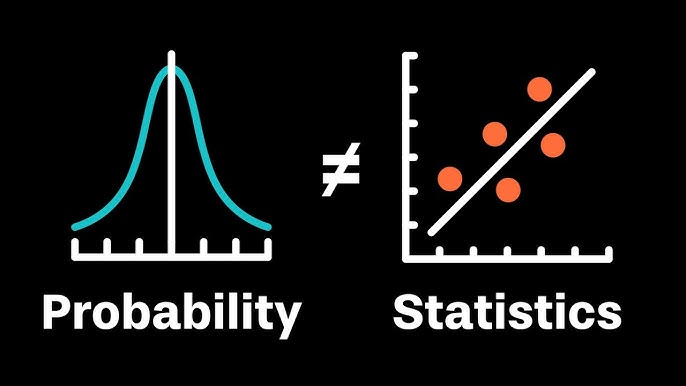
In 2017, Brighton earned promotion to the Premier League. It wasn’t by chance or luck – it was all part of the plan. And once they got there, no one was laughing anymore:
- They defeated teams with budgets 10 times larger
- Profit of £122.8M (the highest in Premier League history)
- They qualified for Europe (for the first time in over 120 years)
But the real masterpiece wasn’t on the field – it was in the transfer market. Soon after, their footballing masterpiece followed:
- Moises Caicedo: bought for £4M, sold for £115M.
- Marc Cucurella: bought for £15M – sold for £60M.
- Alexis Mac Allister: bought for £7M, sold for £35M.
- Yves Bissouma: bought for £15M, sold for £25M.
Each of these players was discovered by Bloom’s algorithms – underrated, developed, and sold at a massive profit. Brighton has become the most profitable football talent factory in Europe.
The important lesson
Brighton is now valued at $920 million. That’s a 651% return on investment since 2009. From a club on the brink of bankruptcy to one of the most exciting football projects in the world.
They created a model that the big clubs are desperately trying to copy. Manchester United, Chelsea, Liverpool – they’re all looking at Brighton and wondering how it’s possible. Bloom proved something revolutionary:
- Data trumps intuition.
- Systems beat chaos.
- Process beats passion.
Bloom’s success in betting and at Brighton comes from two things:
- Trust in algorithms and mathematics
- A constant search for undervalued opportunities – bets, teams, players
The principles are the same – whether we’re talking about sports betting or a football club. While your friends keep playing straight bets, there’s another approach. One that doesn’t rely on luck, but on value and mathematical predictions.
If we missed something, add it in the comments